When Did Culture Become a Brand?
There was a time when nobody seemed particularly interested in explaining culture because people were too busy living inside it. The neighborhood didn't require a mission statement. The barbershop wasn't an incubator for civic engagement. Nobody walked into a used bookstore believing they were participating in an immersive literary ecosystem. The old guy behind the counter sold books because he liked books. The mechanic fixed transmissions because transmissions were broken. The woman who organized the church potluck wasn't cultivating authentic community. She was trying to make sure somebody remembered to bring the damn potato salad. Ordinary life possessed enough confidence that it didn't need to narrate itself every fifteen minutes. Somewhere along the way that confidence disappeared. We began writing descriptions of experiences before bothering to have them, and now we seem trapped inside a strange cultural loop where everything has an explanation, a manifesto, a philosophy, and a branding strategy before it has earned the right to exist.
That change fascinates me because it has happened so quietly that many people no longer notice it. Walk into almost any American city and you'll find the same visual language repeated with religious devotion. The reclaimed wood. The Edison bulbs. The carefully distressed furniture manufactured in a factory to look handmade. The mural that exists primarily so people can photograph themselves standing in front of it. The coffee menu written like a reference page by a graduate PHD candidate in agricultural anthropology. The city brochure explaining that this neighborhood is vibrant, authentic, creative, diverse, and thriving. Every place sounds exactly like every other place because somebody convinced an entire generation that authenticity could be standardized. Apparently genuine local culture now arrives with identical typography, matching tote bags, and a social media strategy.
I remember coffee shops differently. They weren't extensions of the office. People weren't lining up at seven in the morning to occupy the same table until four in the afternoon while answering Slack messages and pretending a cappuccino was paying rent on the square footage. Coffee shops felt like places people passed through because they wanted to see other people. Conversations wandered from politics to music to books to whatever ridiculous thing had happened in town that week. Somebody argued over a newspaper. Somebody else had a dog-eared paperback folded in half. Writers filled notebooks instead of cloud storage. The coffee wasn't always memorable and neither was the furniture, but the people usually were. A good coffee shop accumulated personality because the regulars gave it one. Today many cafés feel less like neighborhood gathering places and more like co-working spaces designed by the same consultant who apparently believes beige is a personality trait. They are beautiful enough to photograph and strangely difficult to remember.
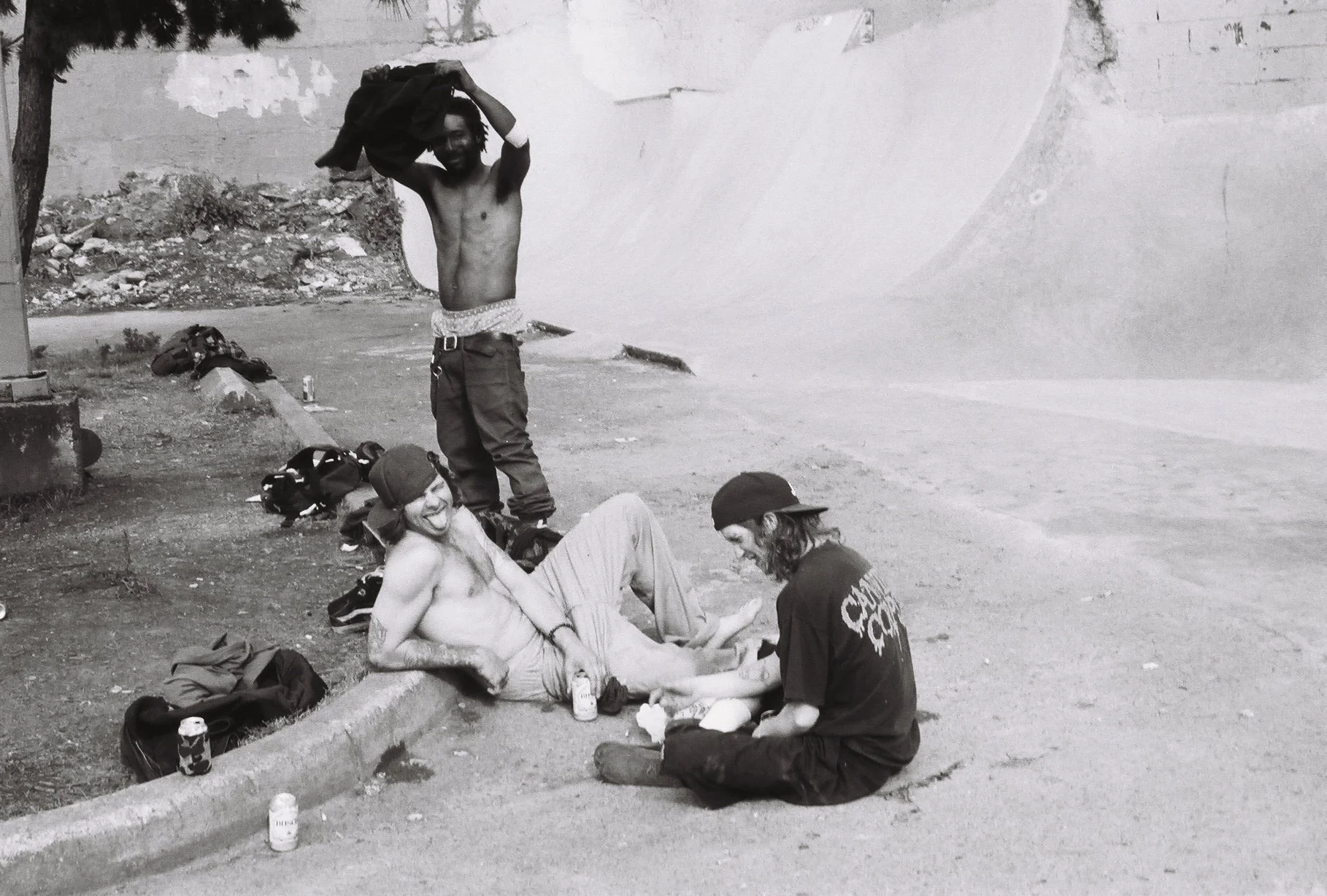
Photography has become one of the funniest casualties of this transformation because photographers once spent most of their energy arguing about photographs. They argued about politics, aesthetics, ethics, race, poverty, memory, documentary practice, and whether photographs were capable of telling the truth. Today a depressing amount of energy gets spent discussing cameras as though a light meter possesses moral authority. It only takes one person. One photographer starts talking about how purchasing a Leica changed their relationship with time and six months later everybody has discovered slowness. One wellness influencer hosts a sound bath and suddenly every coffee shop, yoga studio, boutique hotel, and creative retreat is vibrating under Edison bulbs trying to heal collective trauma. One artist photographs a nude on a skateboard and before long the skateboard becomes a movement. What they usually forget to mention is that none of those qualities live inside a roll of Tri-X. A camera cannot manufacture curiosity any more than owning a violin makes someone a musician. Plenty of people spend five thousand dollars on equipment and somehow never develop the ability to notice another human being. They become extraordinarily skilled at photographing the appearance of depth while remaining terrified of actually asking difficult questions.
Lately I've been spending time in self-described underground galleries because I'm genuinely curious about what younger photographers are making. Underground used to mean something. It suggested work that hadn't yet been absorbed by institutions or by the market. It suggested risk. You expected to walk into a room and see photographs you hadn't seen before. Instead I often find myself playing a strange game. Can I tell where one photographer ends and the next begins? Another nude on a mattress. Another skateboard. Another nude on a skateboard. Another attempt to convince us the combination still counts as surprise. Another point-and-shoot snapshot on Kodak Gold. Another cigarette. Another motel room. Another attractive friend standing in an empty parking lot looking emotionally unavailable. Another convenience store glowing at midnight. Another photograph that seems less interested in the world than in reminding me of another photographer I saw six months ago. The subjects aren't the problem. Great photographers have made extraordinary work from ordinary subjects for more than a century. The problem is that influence has quietly become imitation. Somewhere along the way photographers began consuming more photographs than novels, more mood boards than history, more Instagram than life itself. Eventually the work begins talking to other photographs instead of talking to the world.
That isn't a criticism of nudity. Some of the greatest photographers ever lived made extraordinary nude photographs. It isn't a criticism of skateboarding, suburban life, gas stations, motel rooms, or Kodak Gold. Those are all perfectly legitimate subjects. The problem is repetition masquerading as originality. Influence has quietly become imitation. Photographers increasingly consume more photographs than they consume literature, history, politics, philosophy, or life itself. They borrow aesthetics from one another until eventually the work begins to resemble an endless conversation between Instagram accounts instead of an investigation into the world. The result is a generation capable of producing competent photographs that often reveal very little about the person standing behind the camera.
The influencer economy simply accelerated a habit that was already developing. Everything became performance. The photograph is no longer enough. Now we need a video showing the photographer making the photograph, another video explaining the emotional significance of making the photograph, and finally a caption thanking the universe for teaching us that abandoned gas stations symbolize vulnerability. At some point somebody decided pressing a shutter button deserved the same dramatic treatment as landing on the moon. Every cracked sidewalk becomes a meditation on resilience. Every stranger becomes a lesson in humanity. Every ordinary afternoon gets inflated into a life changing spiritual event because apparently nobody trusts ordinary life to possess meaning on its own anymore. The irony is that the photographers most obsessed with authenticity often seem incapable of leaving the performance behind long enough to experience the thing they're trying to document.
The contradiction doesn't end with photography. Spend enough time around photographers, painters, writers, designers, and influencers and you eventually notice that many of the loudest critics of capitalism have become remarkably fluent in its language. They denounce branding while obsessing over their own brands. They complain about consumer culture while encouraging you to purchase the exact camera, jacket, notebook, preset, workshop, lens, backpack, film stock, and affiliate products they insist transformed their creative life. They speak about rejecting the algorithm while studying engagement metrics like day traders watching the stock market. I don't begrudge artists for making money. Quite the opposite. Artists deserve to get paid, and history is full of painters, photographers, musicians, and writers who survived because someone bought the work. The problem isn't commerce. Culture has always existed inside economies. Michelangelo wasn't painting ceilings for exposure, and photographers have never apologized for selling prints or working on assignment. What fascinates me is how thoroughly the performance of resistance has itself become a market. Anti-capitalism has become a brand category. Authenticity has become a commodity. Even rebellion now has an aesthetic, a pricing strategy, and an affiliate link. It is difficult to take somebody seriously when they spend ten minutes telling me capitalism has destroyed culture and the next twenty minutes teaching me how to optimize my personal brand. Somewhere along the way many artists stopped asking whether the work mattered and started asking whether they themselves were sufficiently marketable. That may be one of the most successful tricks contemporary capitalism has ever pulled off. It no longer asks artists to sell out. It simply convinces them to sell themselves.
Books haven't escaped either. I have spent enough years around bookstores to recognize the difference between somebody who buys books because they are trying to build a library and somebody who buys books because they are trying to build an identity. The first group eventually reads enough to become annoying in interesting ways. They disagree with authors they once admired. They change their minds. They loan books they never get back. Their shelves become disorganized because thinking itself is disorganized. The second group owns immaculate copies of fashionable books arranged with military precision beside ceramic mugs, scented candles, and expensive reading lamps. The books exist because books signify intelligence, just as vinyl records signify sophistication and film cameras signify authenticity. Consumption quietly replaced participation, and somewhere in the process culture became less about what transformed us than what could be photographed.
Perhaps that explains why the word culture now appears everywhere. Every institution claims to support it. Every politician promises to protect it. Every developer wants to create it. The language itself has become suspicious because it usually arrives just before somebody starts selling condominiums or launching a branding campaign. Real culture has never required this much advertising. It grows through repetition, conflict, affection, memory, boredom, neighborhood gossip, family recipes, terrible local bands, arguments that never quite end, bookstores that somehow survive another year, photographers who continue making pictures even when nobody is paying attention, and writers who occasionally offend half their readership because they refused to smooth every rough edge. Culture has always been inconvenient because real people are inconvenient. The moment culture becomes perfectly curated, perfectly explained, and perfectly marketable, it begins drifting away from the people who made it in the first place.
I don't think culture is disappearing. That would be too easy and probably wrong. Culture keeps finding ways to survive despite our endless attempts to package it. What concerns me is something smaller and perhaps more embarrassing. We have become increasingly comfortable confusing the performance of culture with the practice of culture. We know how to look like readers, photographers, artists, travelers, food lovers, and intellectuals. Looking the part has become its own industry. Actually becoming those things still requires curiosity, patience, failure, and time, none of which fit particularly well inside a thirty second reel. Maybe that's why so much contemporary culture feels exhausted before it has even begun. Too many people are rehearsing an identity while too few are willing to disappear into the work long enough for an identity to emerge on its own.
Julian Lucas is a darkroom photographer, writer, and a bookseller, though photography remains his primary language. He is the founder of Mirrored Society Book Shop, publisher of The Pomonan, and creator of Book-Store and Print Pomona Art Book Fair. And he will charge you 2.5 Million dollars for event photography.