A Factory Across the Street
In Expendable Extraction, Fred Brashear Jr. photographs the short distances that generations of industrial decisions have put between factories and homes.
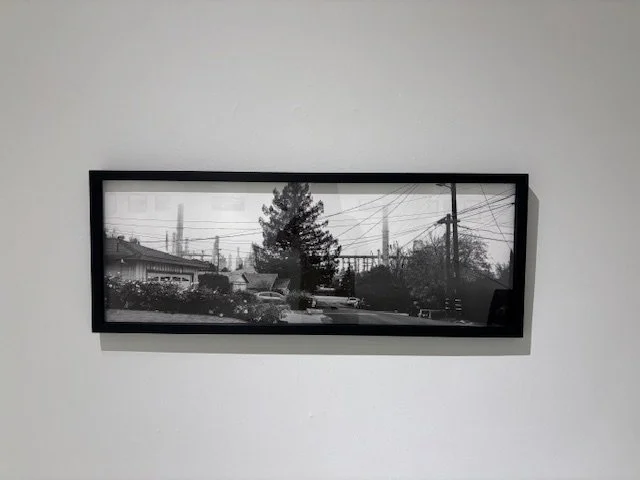
There is a house in Fred Brashear Jr.’s photograph of Reserve, Louisiana, and there is a factory. Between them is a street. The street gives the picture a scale you can measure with your body. How many steps would it take to get from one side to the other? The factory has an industrial scale of its own, but inside this frame, it also has a domestic one. It’s across the street. The distance is short enough to give directions with.
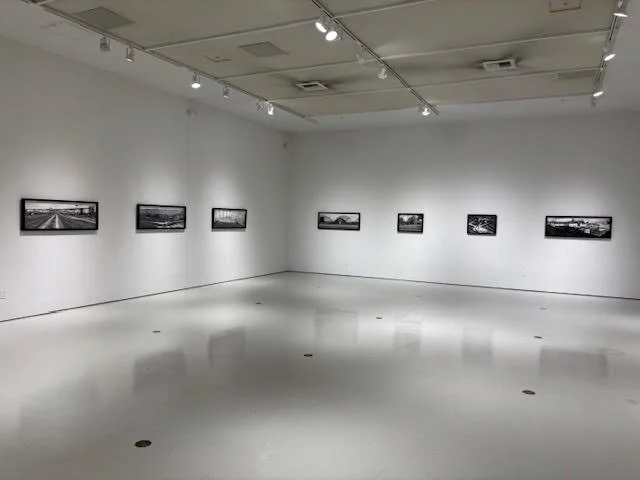
The Reserve photograph appeared in Expendable Extraction, Brashear’s recent exhibition at the University of La Verne’s Harris Art Gallery. The pictures were made on film, and the places where they were taken did much of the work ordinarily left to titles. Reserve, Louisiana. Wilmington, California. Port Neches, Texas. A place name gives the viewer somewhere to go after looking. It also keeps a house from becoming just any house, useful chiefly for the point it helps a photographer make.
Reserve is a majority-Black community in the industrial corridor between Baton Rouge and New Orleans. An Army Corps of Engineers assessment, using 2021 census estimates, put the town’s Black population at about 65 percent. Nearby, DuPont built a neoprene plant on a former sugar plantation in the late 1960s. Many residents of Reserve descend from people who were enslaved on the area’s plantations. Generations later, local residents organized as Concerned Citizens of St. John to press for cuts in the plant’s emissions. That plant is part of the area’s history. The factory in Brashear’s photograph is identified in the exhibition coverage only by its location in Reserve.
In 2022, the Environmental Protection Agency raised concerns that Louisiana’s handling of air pollution was disproportionately harming Black residents along the corridor. It recommended that the state assess the combined burden of pollution when considering several permits, including renewals for the nearby Denka plant. The recommendation asks regulators to start where residents start. A person breathing at home takes in the air from the whole neighborhood. A permit can concern itself with one plant at a time.
In 2023, the federal government sued Denka, alleging that its chloroprene emissions posed an unacceptable cancer risk. Two years later, the Trump administration dropped the suit. The Justice Department presented the dismissal as part of its campaign against diversity, equity and inclusion. Consider what that move did to the question raised by residents. They had asked what they and their children were breathing. The department announced the end of the case as a victory in a fight over federal diversity policy.
The national pattern has been measured. In 2007, Robert Bullard and his coauthors found that people of color made up 56 percent of the population within about 1.8 miles of the 413 commercial hazardous-waste facilities they studied, compared with 30 percent elsewhere. A separate 2018 study using federal data on industrial facilities found that racial and ethnic minority groups generally bore a larger share of the risk from toxic air pollution than their share of jobs at those same facilities. The gap was wider for higher-paying jobs. The promise of jobs treats the neighborhood as a single beneficiary. The research makes it possible to ask who actually gets hired, who gets paid well and who goes home to the air the plant leaves behind.
In Wilmington, California, the eye goes first to the stacked shipping containers. Their edges repeat across the background, one rectangle following another. It takes a moment to pick out the five palms and the railroad tracks in front of them. The palms make five slender verticals against the stacked blocks. The rails carry the eye sideways, along the foreground, through a picture that could otherwise stop at the first row of freight. The containers have the order of things made to fit together. The palms are much easier to lose in the frame. Once they register, it’s hard to look at the containers by themselves again.
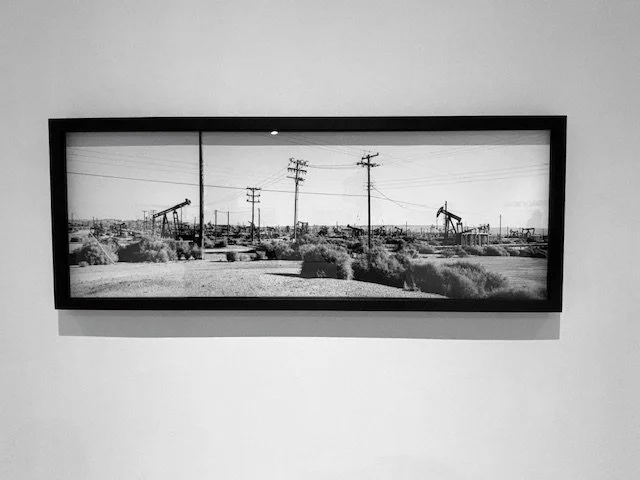
In Port Neches, Texas, Brashear photographs a plant from far enough away for the surrounding land to take up part of the picture. The change in camera distance matters. In Reserve there’s a street to cross. In Port Neches the eye has ground to cover before it gets to the plant. You can read the two photographs together and see the difference between putting industry up against a house and seeing how much land it occupies.
In “Green Street,” made in Africatown, Alabama, vines grow over the road. A street usually gives a landscape photograph a line to follow into the distance. Here the growth interrupts the line, and the road itself becomes the thing you have to look for. That is where the photograph stops and the history has to begin. A vine across a street can show what has grown there. To find out why the street looks this way, or what happened to the people who used it, someone has to ask.
The project grew out of a residency with Black Image Center, where Brashear encountered the idea of sacrifice zones. The word “sacrifice” leaves the person doing the sacrificing out of the sentence. A resident can tell you where the factory is. To learn who chose the site, who issued the permits and whose objections were heard, you have to go beyond the picture. Brashear gives that inquiry an address. He also gives the house a place in the picture alongside the factory. In a photograph about industry, that is a decision.
Madelyn Sugita, a student who grew up in San Bernardino, told the Campus Times that the pictures felt like home. That response changes the way the pictures can be read. A viewer can recognize home in a photograph whose stated subject is what industry has done to it. A landscape can carry that damage and still contain everything a person recognizes about where they grew up. For the viewer who comes to the picture looking for proof of damage, that recognition complicates what counts as worth seeing.
Back in Reserve, the house gives the factory its scale. It also gives us a place from which to judge the decisions that put the two across the street from each other. An agency can close an investigation. The Justice Department can drop a case. The house is still where somebody comes home. From that front door, every new permit ought to begin with a question about what the people on this street are already breathing.
Sources
Natalia Rodriguez’s exhibition coverage in the Campus Times
Alexavier Soltero’s exhibition coverage for the University of La Verne
Fred Brashear Jr.’s Expendable Extraction portfolio
U.S. Army Corps of Engineers assessment with Reserve demographic estimates
Toxic Wastes and Race at Twenty
Racial disparities in pollution exposure and employment at US industrial facilities
EPA’s October 2022 letter on Louisiana air permitting and cumulative impacts
Associated Press reporting on the Justice Department’s dismissal of the Denka case
Julian Lucas is a photographer, writer, and bookseller in Claremont. He runs Mirrored Society, a photobook shop and journal. The books are for sale. The existential questions come with them.